Edible packaging becoming possible
summary:On what timescale such packages will become available is unclear, but there are already machines developed for the production of edible packaging....
Every day we humans produce about three pounds of waste individually, much of which consists of packing material. Researchers and designers are working on a solution to reduce waste. As a result, more and more packages appear on the market that are compostable and made from recycled materials. But packaging that you can actually eat is now becoming possible as well. In the future you won’t just eat the soup, but also the packaging that surrounds it. On what timescale such packages will become available is unclear, but there are already machines developed for the production of edible packaging. David Edwards, a professor at Harvard University, and his company produces Wiki Cells packaging, made of chocolate, fruit, nuts or seeds with a bit of chitosan (biochemical polymer) or alginate (from seaweed). There are several variants of Wiki Cells. For example, a Gazpacho soup surrounded by the membrane of a tomato, and a membrane of an orange containing orange juice. The edible coating can have virtually any flavour you want.
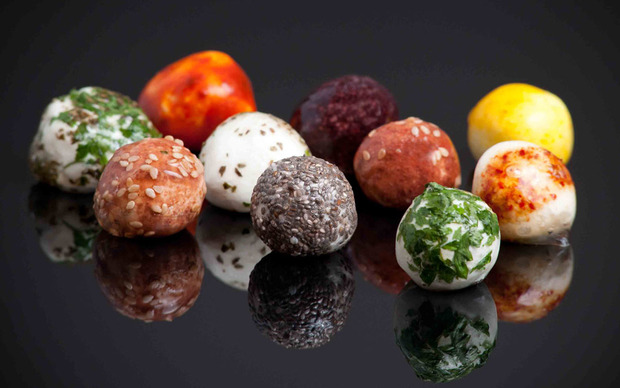
Others products are more reminiscent of a fruit peel. This tougher version of the wiki Cells is made of cane or isomalt. Overall it looks a bit like the skin of an apple, pear, grape or orange and that was precisely his inspiration. The products basically look like balls. To use the product you need only to wash it, after which you can safely eat it with content and all.
Edwards expects that all food and liquid will eventually be packaged this way. He hopes that the first edible packaging will reach markets as early as this year.